
Carbon avoidance
Peatland restoration and conservation in Indonesia


Peatlands, particularly in Indonesia, are among the world’s most vital ecosystems, storing vast amounts of carbon. Indonesia houses 36% of the world’s tropical peatlands, yet these ecosystems are rapidly being destroyed for plantation agriculture, including oil palm and acacia.
The Katingan Mentaya Project (KMP) is a tropical peatland forest protection and restoration project in Central Kalimantan Province of Indonesia, on the island of Borneo. The project was enacted to prevent the planned conversion of the forest area to industrial-scale acacia plantations, preventing the release of greenhouse gas emissions that would have occurred had the project not intervened.
The project area covers 157,875 hectares of land, divided into two ecosystem restoration concession licences. The wider project zone represents the extent of the area in which the project activities are implemented.
The Katingan Project’s goal is to protect and restore the peatland ecosystem; to offer local people sustainable sources of income; and to tackle global climate change.
Project timeline
31 Dec 2023
01 January 2020 – 31 December 2023 Monitoring Period
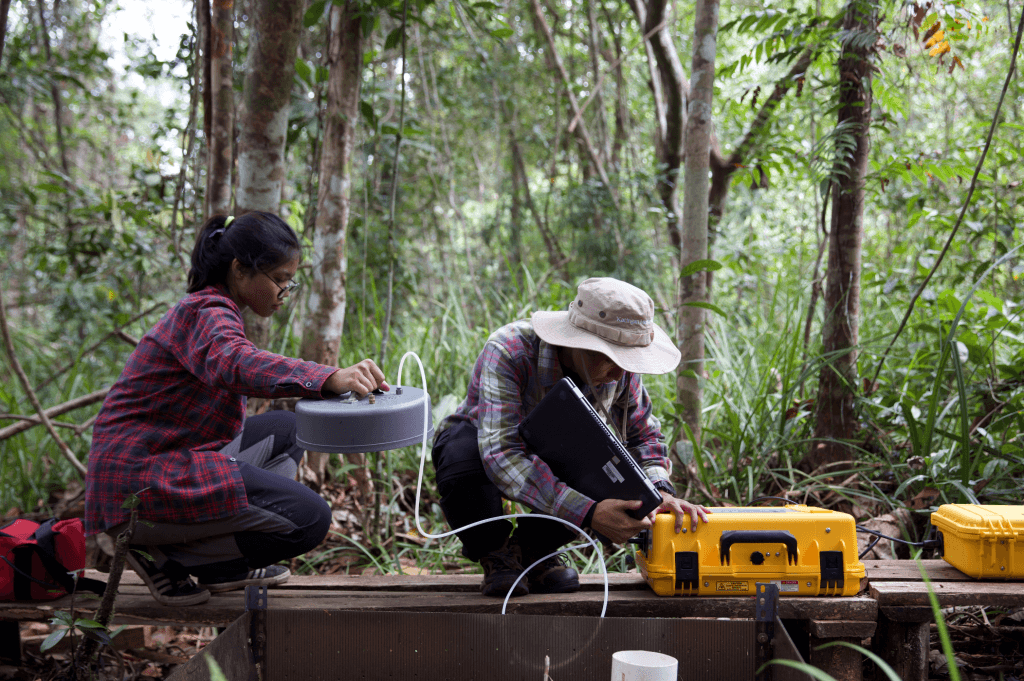
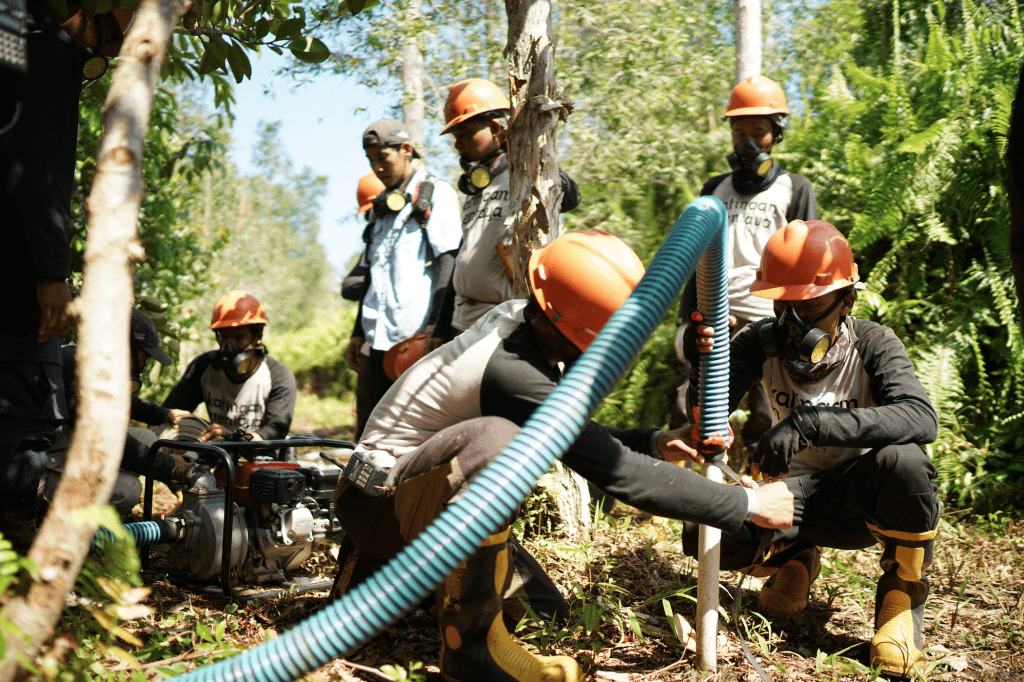
8 new canals were targeted for rewetting between 2020 and 2023, with 17 canal blocks constructed to support hydrological restoration.
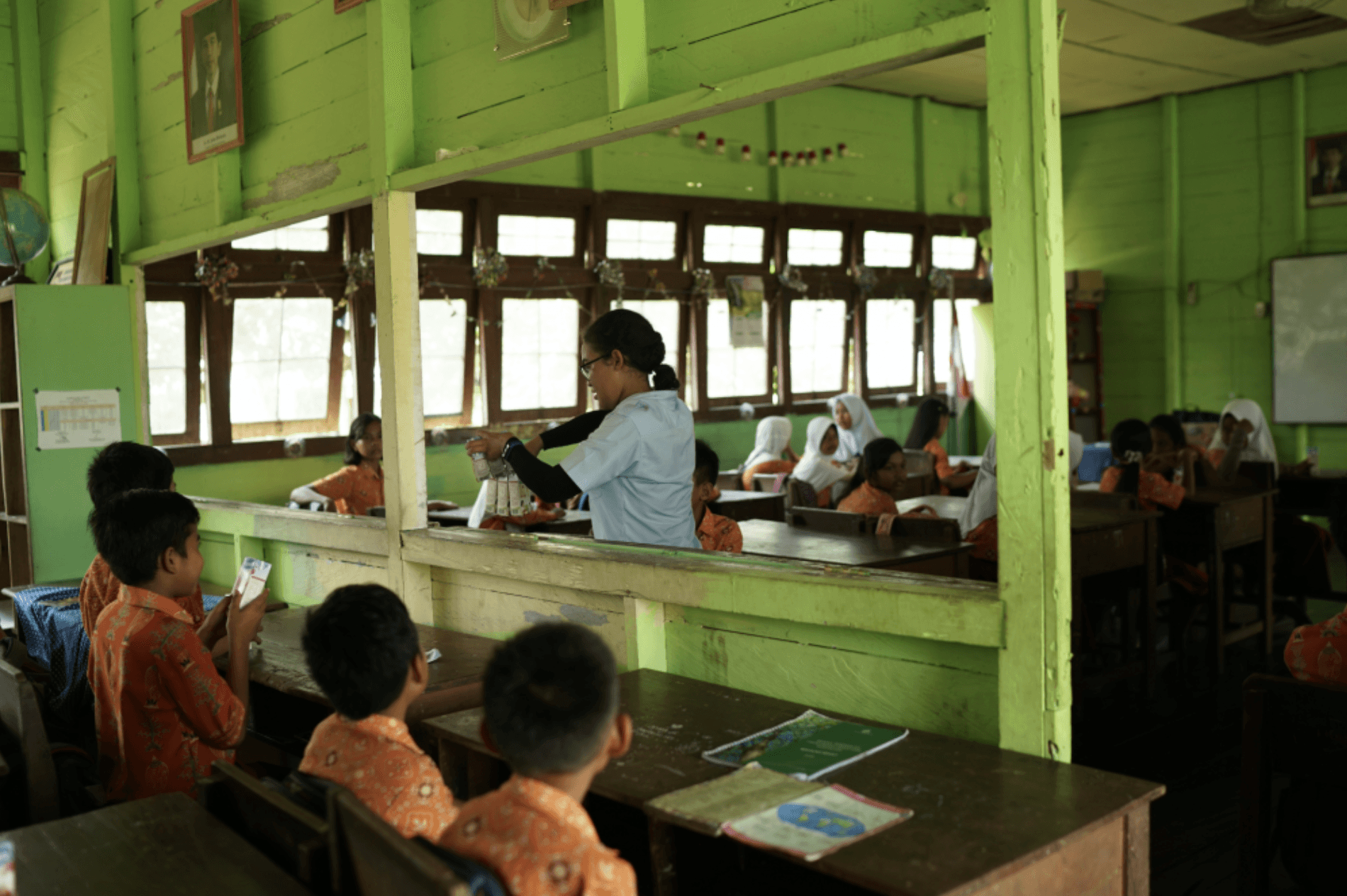
6,727 community members participated in structured decision-making activities; 80 MoUs signed with 34 villages since 2015.
No large-scale fires recorded across 149,800 ha; 1,380 community members trained in fire response and awareness.
Over 7,800 people have improved incomes, 1,200 women have benefited economically, and 366 people have gained full-time jobs.
29 Jul 2016
Verified under the Verra Climate, Community & Biodiversity (CCB) Standard.
1 Nov 2010
Project start date


About
Live
2022
Peatland Restoration
1
3
4
6
9
10
13
15
Fund this project
This project is supported in our REDD+ in the impact shop.
Verifications
Verification: Verified Carbon Standard and Climate, Community and Biodiversity Standard
This project is verified by the Verified Carbon Standard and Climate, Community and Biodiversity Standard. You can view it on the Verra Registry here.